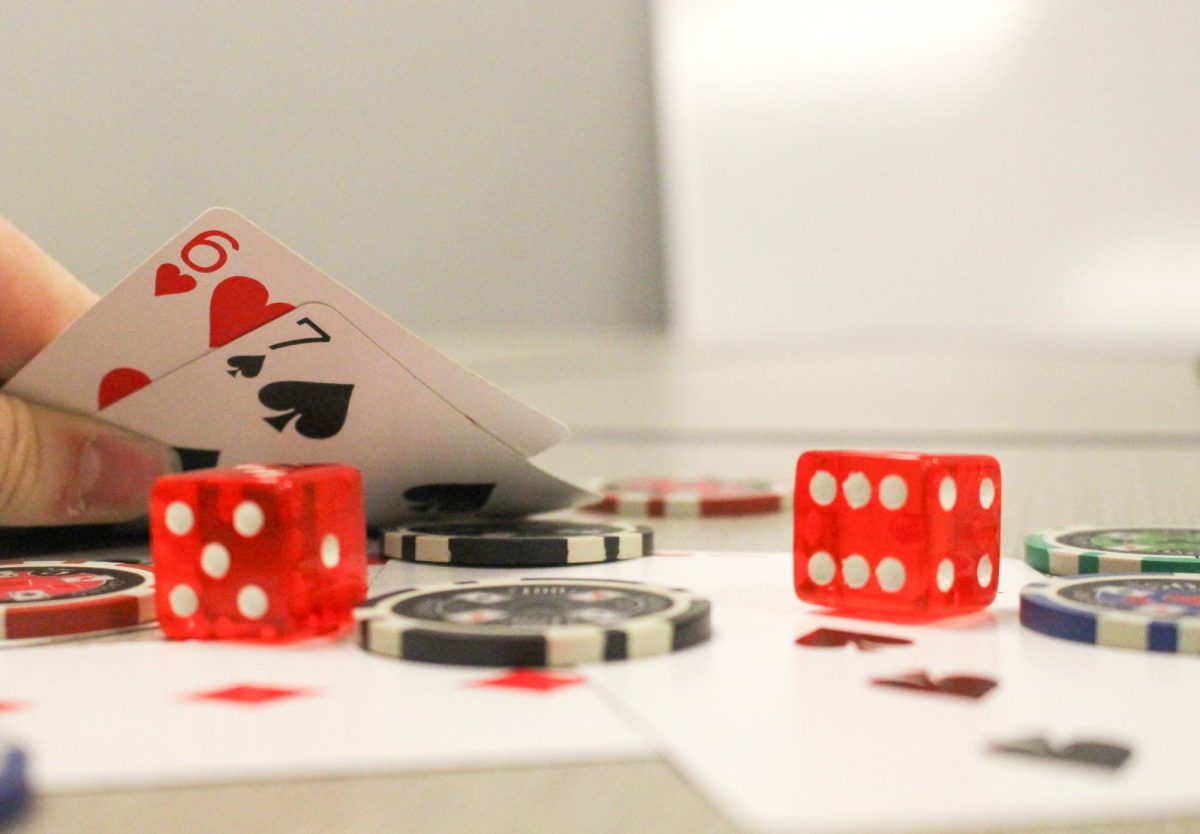
Seemingly manic everyday people clutch wads of cash claiming you too could win hundreds of dollars from betting only 5 dollars. The idea of simply wagering a mere 5 dollars to receive hundreds throws the viewer into the world of gambling – what’s the harm in a few bucks? According to Dr. Lia Nower, the director of the Center for Gambling Studies at Rutgers University School of Social Work, “because of gambling on mobile phones and tablets, there’s no real way to keep children from gambling on their parents’, friends’, or siblings’ accounts, and they’re being bombarded with all these advertisements. This is a recipe for problems among a lot of young people.” According to the World Health Organization, gambling addictions lead to financial stress, relationship breakdown, family violence, mental illness, and suicide. With the recent rise in popularity of online gambling platforms, underage gambling has become a prominent problem among adolescents, raising concerns about its impacts on adolescents.
Gambling has become increasingly easy to access with the advent of the online takeover. A 2018 Canadian survey showed that more than 38,000 minors between the ages of 12-18 had gambled. In the state of Florida, the legal consequences of underage gambling vary from community service and drivers license suspensions to fines. Although states such as Florida prohibit minors from gambling, they often find loopholes. Online gambling sites such as Fanduel, BetMGM, and DraftKings often have loose identification systems. According to the University of Michigan, their lack of regulation regarding age allows for forgery, leading to a recent increase in underage gambling. Although playing behind a screen gives a sense of security, it doesn’t change the fact that consequences still exist.
The developing brain, like any brain, can experience a dopamine rush. While dopamine isn’t necessarily a bad thing, depending on the stimulus, excess can have negative effects. According to the Cleveland Clinic, dopamine is a hormone that acts as a reward system which when released pushes one to repeat the behavior that gave the rush. Dopamine is released by brain neurons in the hypothalamus – a brain region that regulates hormones involved in stress, growth, reproduction, and metabolism. However, dopamine highs also have their lows. Research by Cleveland Clinic shows that the negatives of high dopamine levels include trouble sleeping, aggression, and lack of impulse control. Although essential to survival, dopamine is the primary hormone responsible for addictions – phones, drugs, and alcohol – and gambling is no exception. Gambling being the source of someone’s dopamine encourages them to do it more. Based on an article from UCLA Health, that intense dopamine rush can eventually lead to a craving to continue gambling. Even if users are losing money they’ll keep chasing that feeling of reward, therefore, they’ll keep playing in order to win. Gambling does much more psychologically than just release dopamine though. Users who gamble are creating an unhealthy habit of releasing dopamine into the wrong activity, according to the Lifestyle Sustainability Directory this is referred to as a compulsion loop. Gambling can also lead to stress, anxiety, drinking and sleep deprivation in minors as losses put unnecessary pressure on them. The stress can also worsen behavior as well as academic performance, withdrawing the student to themselves. According to the American Psychological Association, people who suffer from a gambling problem tend to have a smaller amygdala and hippocampus – the two brain regions that handle emotional maturity and stress regulation. In the long run, gambling can lead to lifelong addiction especially during critical stages of development..
According to an interview with Dean Henderson, gambling has not been spotted by administration in our school yet, and therefore there have not been any disciplinary issues. “It could be very hard to catch somebody [gambling], because you could easily swipe out of your phone,” Henderson said. Outside of school, however, underage online gambling does not fly under the radar. Sites are often investigated, and fake IDs and fraudulent bank accounts are flagged and reported. If anyone was caught gambling on school grounds, Henderson acknowledged that there would be consequences similar to the code of conduct when handling other illegal underage activities.
Gambling can lead to severe consequences for the developing mind. Teens are exposed to a deluge of commercials and advertisements that glorify gambling, which causes them to believe it is a good way to yield profit. The intense dopamine rush that comes from winning leads to a craving for more. This craving eventually will lead to addiction that can impede on academic achievement, and lead to future mental health problems.